

At Delego, we work closely with SMEs to help them achieve a competitive edge and fair opportunities to win work against
larger organisations in public sector procurement. One of the most common questions we hear from clients is: “Should we challenge a tender decision when we believe the outcome was unfair?”
With the Procurement Act 2023* now in force (as of February 2025), the landscape has shifted. The Act
aims to simplify procurement and promote fairness and transparency, but it also offers clearer written mechanisms for
suppliers to raise concerns if processes go wrong.
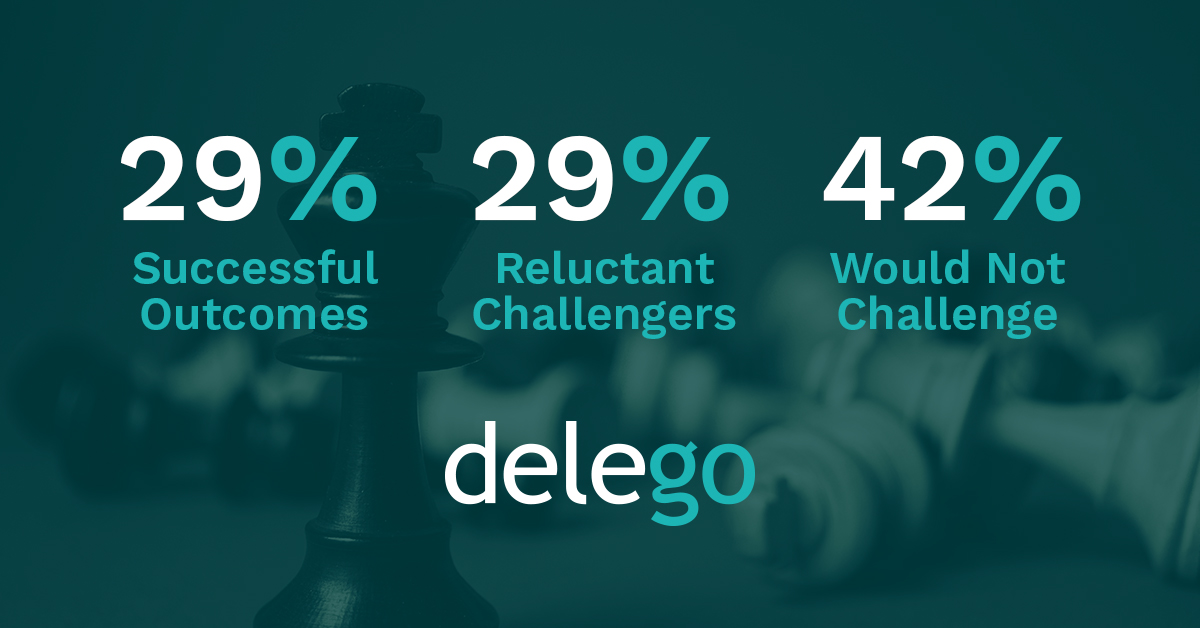
However, many businesses still feel reluctant to dispute an outcome with a client – as shown in our recently conducted
Delego opinion poll**. We asked voters, if in their experience they thought it was ever a good idea to challenge a
tender award outcome decision – with over a third believing it was a bad idea, and 29% saying they would be reluctant to
pose a challenge.
Another 29% of those taking part in our survey however, stated that they had in fact pushed against a tender outcome and
been successful in winning their challenge.
When is a challenge justified?
If you believe a contracting authority has breached legal obligations, such as failing to apply evaluation criteria
transparently, or showing bias, you may have grounds to challenge the award decision.
Suppliers can bring proceedings in the courts for breaches of the procurement rules, including seeking remedies such as
damages, however, challenges must be made promptly within the limitation period (typically 30
days) from when the supplier knew of the breach***. Suppliers may need to act even more swiftly to prevent
a contract from actually being awarded, and can only benefit from the automatic suspension on contract making if they
bring a challenge during the 8 working day standstill period.
However, court proceedings are not the only way for suppliers to resolve concerns about a procurement. The new Act’s
enhanced focus on greater transparency will enable suppliers to
“spot and raise any issues related to the procurement at the earliest opportunity, so that, as much as possible, they
can be resolved when they arise and before the contract award decision is made or the contract is entered into (and
outside of court). By resolving issues that arise during the procedure at an early stage, the risk of disruptive legal
action is reduced.”
Is it worth it?️
Legal challenges can be costly, time-consuming, and many believe come with the risk of straining future relationships
with the contracting authority. For SMEs, this can be a significant burden. But in cases where there is clear evidence
of an error in the process and the potential impact of the lost opportunity is substantial, it may be worth pursuing –
if perhaps not in court.
In the first instance, suppliers should try to resolve their concerns through informal means, such as requesting a
debrief or further clarification from the contracting authority. A contracting authority is expected to share its key
decision-making materials with a challenger at an early stage so if there is evidence of a material error, a request for
disclosure can force the authority to engage with your concerns by reviewing their records. This can often lead to a
satisfactory outcome without litigation, but beware the 30 day limitation deadline to take formal action.
Delego’s Advice
We recommend a prompt and detailed approach:
- Act promptly: With only a 30 day window to bring a challenge, and only 8 days
to stop a contract from being awarded you must act swiftly to protect your position and be ready to seek early
advice. - Request Detailed Feedback : Ensure your scores have been fully explained (justified).
- Document References/Evidence : Keep a log of key references to elements of your bid submission
documents which are relevant to your challenge and easy to direct to. - Use Expert Support : As well as gaining support from a team of bid experts
(delego.co.uk) to guide you through the writing and
submission/post-submission processes, get to know a procurement law specialist who might be a trusted partner to
assist in a challenge should you wish to escalate your dispute.
Ultimately, challenging a tender decision should be a last resort – but under the Procurement Act 2023, it’s a more
structured and accessible option than ever before if you believe your bid was unfairly rejected.
For more advice and to discuss how we can help with your tenders and marketing, we’re here to help you navigate the
rules and stand up for fair competition.
* https://www.legislation.gov.uk/ukpga/2023/54/contents/enacted